


/
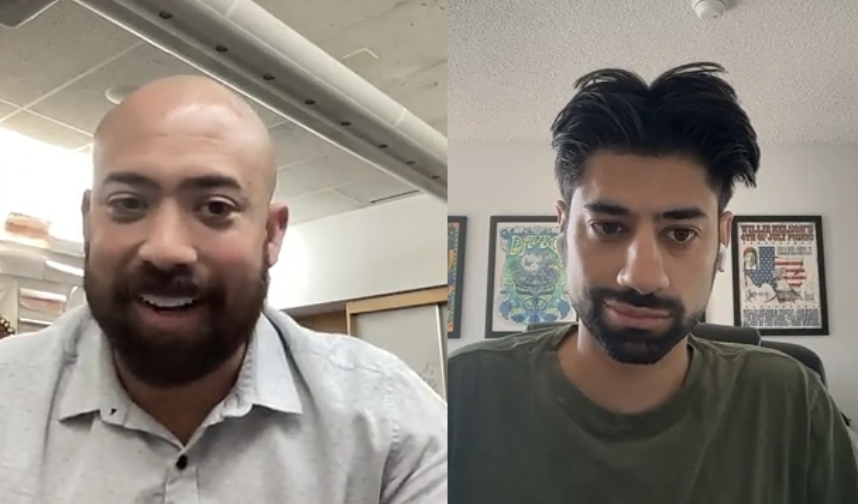
The great grandson of Kenichi Zenimura “The Father of Japanese baseball” talks to us about his family’s history with baseball, WWII internment camps and his own journey to discovering his mixed race identity.
Welcome to the Gold Sea Podcast, featured with other great Asian American content on GoldSea.com, the Asian American Daily.
Romen Borsellino (00:14)
Hello and welcome to the Gold Sea podcast. We have a very special episode today. We held a contest to see who had some of the best identity stories in the AAPI community. And we got a ton of entries and I’m speaking today with Brandon Zenimura, who stood out above the rest, had an incredible story that he is gonna share with us right now, not to hype you up too much and ruin expectations.
Brandon Zenimura (00:40)
Thanks
Romen Borsellino (00:43)
Brandon AKA Zeni, welcome to the podcast.
Brandon Zenimura (00:47)
Thank you very much for having me.
Romen Borsellino (00:50)
So tell us, let’s just get right into it: You are a teacher, you have an interesting mixed race identity, and you have a very very cool story about one of your family members and his impact on a tradition here in the United States and beyond. So with that, tell us about yourself, Brandon.
Brandon Zenimura (01:15)
Well, yeah, I’m for the most part, I’m a teacher, married, we have three kids. And, for the most part I’ve grown up, knowing only one side of my identity. And I guess for a long period of my life, thinking that I was only Japanese and only, and, and raised in that particular way, even though I don’t necessarily look the part, I think I learned that I was and realized it, that I was mixed race and biracial, I think seventh eighth grade where all of sudden I had some friends that were black and they’re like, yo bro, like you’re mixed. You’re part of us.
Romen Borsellino (01:57)
Literally, just from looking at you and interacting with you, your friends were like, you’re black?
Brandon Zenimura (02:01)
Some of that, some of that, but it was also like that I had, I had some relatives, some distant cousins on my dad’s side. So I recently just met my dad and met with him and it’s still kind of a, we’ll say it’s a rough relationship in the sense of I’m trying to enter the waters very, very slowly.
Romen Borsellino (02:15)
Amazing.
Brandon Zenimura (02:27)
And some of it is trust, some of it is I didn’t realize I had daddy issues until I became a daddy and seeing myself in my kids’ eyes. Well, seeing myself in my kids’ through my eyes, it was like, wow, yeah, I think I have daddy issues. Here I come therapy. But yes, it was being a Japanese kid for a long time. I was around my grandparents and my great-grandmother quite a bit. And they knew nothing else. They never told me anything else. My mom alluded to it. Like for me to go to a junior high out here, it was a magnet school program, so you had to apply to go to it.
Romen Borsellino (03:09)
Sorry, where’s that here? Where are you based?
Brandon Zenimura (03:11)
Fresno, California. And so my grandfather sent in my application, but he put down Asian American. But my test scores were not high enough. >y mom, I got denied, and so my mom was like, no, no, no, no, no. Like, you got to put him in as African American.
Romen Borsellino (03:32)
Amazing.
It’s slightly different for me, but I have literally made that joke frequently that as I’m an Indian Italian and I stopped, I realized it was not beneficial to put Asian on my applications for the exact same reason you said they would look at my test scores and be like, what’s going on here?
Brandon Zenimura (03:48)
Yeah. You are not Asian enough.
Romen Borsellino (03:56)
Yeah, exactly. That’s fascinating that you sort of have the same experience. I mean, it’s also, and I will not make you get into this because this could be a multi-hour conversation, but there’s obviously this major debate rolling nationally sort of about admissions and affirmative action and lawsuits that have been brought by the Asian community and then the outcomes sort of harming the Black community in a lot of ways. Sometimes unintentionally. So I’m not sure if you’ve been following that and have thoughts on that, but you are very much in the center of that sort of thing, given your background.
Brandon Zenimura (04:36)
Definitely, it’s been quite the conversation with some kids in particular that are looking to be college bound. So that’s, it’s touchy because I know that I am a product of that. I applied to colleges as an African American, I applied to schools as African American on all the different documents and applications that we fill out, even my kids. My kids are only a quarter, or a quarter Black so they do not look the part yet. They’ll mark it down as African-American and Black because I know that the opportunity for them to potentially get to that gets to someplace where they wouldn’t have if it were Japanese.
Romen Borsellino (05:06)
Right. No, I appreciate that. It’s a messy, complicated, not fun situation. But it sounds like you’re pretty pragmatic and thoughtful about it.
Brandon Zenimura (05:22)
Yeah, I know. I’m trying to be. Trying to be.
Romen Borsellino (05:36)
So your world, did your world change, would you say, when you found out, you know, that you were half black? I mean, it’s interesting. Let’s just say we didn’t have 23 and me when you were in middle school, right? So maybe——
Brandon Zenimura (05:50)
Hahaha. No, it wasn’t there. 41. So yeah, 23 of me didn’t come out until we were quite, quite adult in adulthood. And it was scared.
Romen Borsellino (06:02)
That would have been particularly jarring, would imagine, finding out from an app.
Brandon Zenimura (06:08)
Yeah, yeah, that you just get this notification like, hey, by the way. It was a little bit, but then I’m trying to find like some ownership in it. I was an athlete. So the fact of like, well, that makes sense. Like you’re like, of course, you’re going to be fast. Of course, you’re going to do this. So you had all of those particular comments coming out of, you know, this junior high age of time. And then I also
Romen Borsellino (06:11)
Yeah. Yeah.
Brandon Zenimura (06:34)
Going to this magnet school and then going to the high school my freshman year, it made a lot of sense because it was also the high school that had the biggest population of African-American students on campus. And so it just kind of felt appropriate to be there. I had some extended, some cousins that were there that I had no idea that I had, because they were a part of my dad’s side that I didn’t necessarily ever interact with. So they were
Romen Borsellino (06:38)
Crazy. Were they at your school? So you literally had classmates that you did not know were your cousins until this.
Brandon Zenimura (07:12)
Yeah, yeah, was bonkers.
Romen Borsellino (07:15)
That’s amazing. I hope you were careful. I hope nothing negative had happened in the hookup scene before you knew who your cousins were and weren’t.
Brandon Zenimura (07:23)
No, so what’s funny is that. So actually in these interactions like you’re talking like OK, so I met I met my dad just recently where I actually sat down, had a conversation. I was 40 years old and having daddy issues and that whole thing, but in other iterations of my life, like my freshman year we had a basketball tournament and we get done with this basketball tournament. We just lost to a team that we wouldn’t. We weren’t supposed to and this guy comes up to me and he was like, “hey, what’s up? Hey, not bad game” you know, and he gives me a handshake and he puts a hundred dollar bill in my hand and I was just like what You know, you’re a freshman highs like 100 bucks. Okay, like what’s
Romen Borsellino (07:55)
What? This is a teammate? There’s an opponent, like there’s a kid your age?
Brandon Zenimura (08:11)
No, this was a guy and come to find out it was my dad. was my biological dad. So I had no, mean, one of those things where I have no idea who this guy is, just came to shake my hand, gave me a hundred bucks. Like, ⁓ did it curb the loss a little bit? Yeah. Like, so.
Romen Borsellino (08:12)
No. I would be throwing the next game if I knew what came when I lost.
Romen Borsellino (08:35)
Did your dad expect you to know who he was? I wonder what he expected you to think when a stranger gave you $100.
Brandon Zenimura (08:46)
You know, I don’t know. I never thought about that. Never really thought about that. I mean, I know that there were ⁓ Fresno is kind of a weird place. Like we’re a big city, but at the same time, like everybody knows everybody. So we have this real big, small town feel. So everybody knows everybody. Because of where I went to school and because my name is, you know, you throw it into Google and there’s only one Brandon Zenimura in this world. then kind of my
Romen Borsellino (09:09)
Yeah, as a Romen Borsellino I feel you on that. Trust me.
Brandon Zenimura (09:16)
And I mean, I tell my students this all the time, like you can Google me, you’re going to find me. Like it doesn’t matter where I am. Like you’re going to find me. But because I’m the only Brandon Zenimura in the world, it made a lot of sense that he could keep tabs in some way of like knowing where I was, how I was doing, that I was doing well in baseball, doing well, basketball, running this, doing that. So I think in some ways he had tabs on me. Like there was there were people that would communicate.
Romen Borsellino (09:33)
Yeah.
Brandon Zenimura (09:46)
As I’ve gotten older, I know that part of that of the conversations I’ve had with some other friends, they’re like, yeah, my dad knows your dad.
Romen Borsellino (09:57)
Right, wow, are he and your mom in touch?
Brandon Zenimura (10:03)
Not that I know of. Really not that I know of. Like I think that in my conversations with him as an adult, he’s said that he’s reached out and he’s tried to connect and he’s tried to be somewhat maybe in the frontage road or the tangential like path that I am.
Romen Borsellino (10:22)
Yeah.
Brandon Zenimura (10:26)
But yeah, it never really came to volition where he revealed himself, took off the mask and, aha, I’m here, I’m here, Brandon.
Romen Borsellino (10:32)
Yeah, in a dramatic… I mean, as you’re…This already could be a movie, the way you’re describing it. Like, I wouldn’t put it past that to be a part of the story.
Brandon Zenimura (10:42)
It would, yeah, I can see it.
Romen Borsellino (10:46)
So when you found out that you were half black, was there immediately anything like, where you’re like, now I can dress this way, eat this way. Dare I even say, any words that you’d always wanted to say?
Brandon Zenimura (11:00)
In some ways, yes, but at the I don’t look the part to like complected, you know, there’s there’s this there’s this great line from he’s a he’s a spoken word poet, Lemon Anderson, who did it like this Ted Talk of like Etheridge Knight’s poem of like, Don’t Take My Air Jordans. And he describes like being like complected with the idea of being skin. Like I’m not white enough to be white, but I’m also not black enough to be black. I felt that, like as much as I part of that identity and as I got older, I think I’ve tried to lean in on that just because of, know, action and what being half black has allowed me to be and allowed me access to as far as getting to school and that whole thing.
Romen Borsellino (11:34)
Right.
Brandon Zenimura (11:54)
Yeah, it was, don’t look the part. And even talking to my kids about this as my daughter is doing her hero project on Rosa Parks in second grade, it’s like, well, I think we need to think about this a little bit differently because it’s all about some identity and being a quarter black, if we are going to be part of that community and be and identify, then we should know.
Romen Borsellino (12:11)
Yeah. Totally.
Brandon Zenimura (12:24)
Should have. We should have some knowledge under our belt that we’re not completely in the clouds and think that we can just float through.
Romen Borsellino (12:33)
No, totally. I mean, of all the people who have experienced, I’m not going to say an identity crisis, though that’s probably not far off, you are incredibly thoughtful in your approach to all this. And I mean, I’m sure you’ve had plenty of time, years, decades to think about this. But I’m very moved by the ways in which you were able to speak about these issues in such a sort of both seemingly nonchalant, but both very like nuanced and comprehensive.
Brandon Zenimura (13:06)
Yeah, well, funny that so going to college, I went to a junior college first, some of which was because I wanted to play baseball. I got into UC Irvine out of out of high school, just kind of part of like my test scores were good enough. But applying as an African American male, the biggest push my senior year of high school was they had recruits come out and say, try to make us 1 % at UC Irvine. Try to make us black folks, like let’s reach 1%. So they came out, they picked me up from high school, they took me down to UC Irvine for a night, like we stayed a night. We these great like tour groups that took us around the campus, that took us around the campus, showed us around, like introduces to people, some of which like I had friends, I had friends that were at UC Irvine at the time living in the dorms and they’re like, dude, what’s up? Like you’re gonna come here. It’s a really cool experience. And so a lot of me out of high school wanting to go to UC Irvine and some of it was like, well, yeah, let’s jump that one percent.
Romen Borsellino (14:12)
Well, that’s great. I think it also shows that for all the attacks against DEI and diversity and affirmative action, it’s good policy. These schools are getting students excited to want to go there and wanting to be a part of that community when you explicitly talk about it head on rather than just make this a taboo subject, I would say.
Brandon Zenimura (14:47)
Yeah, yeah, I agree.
Romen Borsellino (14:49)
So my, you know, I’m, as I mentioned, I’m half Indian, half Italian and people often ask me, I’m sure that the question you can relate to is, you know, so do you feel more in touch with your Indian side or your Italian side? And my answer has generally been, I try and be as in touch with both as possible by virtue of the fact that people look at me and think he’s a brown guy, he’s Indian. That just forces me to slightly put that more front and center. And that’s not necessarily my decision, it’s the of those around me who, based on my appearance, that’s sort of where I’m thrust into. Not that there’s anything wrong with that, I’m very proud of my Indian American identity, but I’m sure you can very much relate to that given that your identity is probably largely based on how people interpret you when they see you, and then your last name obviously validates that.
Brandon Zenimura (15:42)
Yes, yes. Agreed. That’s in, there is a there’s a new exhibit that just was opened to now two and a half weeks ago called we, uh, I Am An American. So it’s based on like the Nisei soldiers that were fighting during World War Two. So, you know, short, long story short, World War II, Japanese bomb Pearl Harbor. All Japanese Americans on the West Coast are by executive order 9066 FDR puts every Japanese American or anybody of Japanese ancestry into internment camps. As all of these internees are there, there are some that decide to join the military. And so we have stories from the 442nd, the Hunter Battalion, and then also recently more information from the MIS, which is the Military Intelligence Services.
Japanese soldiers, so Japanese American soldiers with Japanese ancestry fighting in the war against the Japanese. And MIS were left in these left on these islands in the Pacific and told that if you are caught, they’re codebreakers for the most part. They’re interpreters and codebreakers. If you’re caught, you’re not American. And so left to fend for themselves for a long period of time. And this was all kind of
Romen Borsellino (16:47)
Wow.
Brandon Zenimura (17:07)
Under wraps in that way. And now that all this information is kind of surfacing and statute of limitations, I’m sure, we have now these great stories that are being told. And so the past three years, there’s been an effort from the United States military history, I believe more so the army, but they put this thing together, this fantastic, I mean, it’s a huge, fantastic exhibit that I got a chance to see. I was just on a speaking panel in
Romen Borsellino (17:15)
Okay. Okay.
Brandon Zenimura (17:37)
San Francisco for the opening week and it was a panel on baseball. But a lot of people don’t. Since my grandfather passed away, there aren’t a whole lot of people that share that story Great grandfather, my grandfather was one and the closest tie. He was in camp. He was 15. He was hanging out with dad on the baseball field kind of thing. He played at Fresno State, played in Japan. So he’s got
Romen Borsellino (17:38)
Wow.
Brandon Zenimura (18:08)
He had stories upon stories upon story.
Romen Borsellino (18:11)
My god, I can’t even imagine.
Brandon Zenimura (18:13)
Funny that we never
Romen Borsellino (18:14)
This was your great grandfather that was interned? Or your grandfather?
Brandon Zenimura (18:17)
Great grandfather. So my grandfather. My grandfather was 15, 14 and 15 when they were interned. Great grandfather was 40 would have been 42 essentially. He was born in 1900, but the idea was, you you’re in camp. ⁓ I know that if I wonder after this past after two weeks ago being on that panel and talking about baseball and it was it was a really neat event just because they had multiple generations and multiple stages of what the Japanese intern experience was and what that means for baseball now. So it’s all kind of tied to baseball. But it was, you know, talking about the experience of what you look like, you know, approach. I’m going downstairs towards in this hotel’s ball towards this hotel’s ballroom. And I’m just getting shuttled in this like, well, yeah, just go register over here, sir. Over here. Like, no, I’m on the panel.
Romen Borsellino (19:09)
Yeah. Yeah, of course. We’ve been there.
Brandon Zenimura (19:27)
They’re like, what panel? What panel is that? And it’s like, the baseball panel. My name’s Brandon Zenimura. And they go, they look on their list. Look up. Do you have any ID, sir? It wasn’t that bad, but it was more in the sense of that somebody then came by and it was like a validation like, you’re one of us.
Romen Borsellino (19:45)
Yeah, right.Yeah, yeah, wow, that’s a lot.
Brandon Zenimura (19:59)
It’s kind of fun to float under the radar in that way, you know, the idea of through appearances. Yeah, I’m not recognized in that sense. Like my yeah, my students, they all see me now. And I mean, this is year 15 of me teaching. So teach all the kids that I’ve taught. They all have some kind of I used to have my great grandfather’s picture on my wall and talk about it and especially when we had one of the high schools that I taught at, we had a memorial to the Japanese internees that would have graduated from that high school in 1941 and would have graduated in 42, 43, and 44. And so because their graduations had been kind of squandered because of Japanese internment, they have this big rock and with these really nice trees and I mean, it’s a dedication and plaque on it and all that. ⁓ But I would take my students out to go see it because we would get to the point of reading Night by Ellie Weisel and talking about Night was also the the shuttling of people away from their homes and to then describe the Japanese American experience where those that were had Japanese ancestry and how they were pulled away and how some of the ⁓ the iconic lines that come from Ellie Weasel’s night of being in the train and looking and seeing things through the windows that is quite literally the experience that a lot of these people of Japanese ancestry had while they’re being sent to Dead Square in the middle of Arizona, middle of Arkansas, let’s go to Arkansas. I mean it was these desolate desolate places my great-grandparents my grandfather ended up in Gila River Arizona, which is on an Indian reservation So even now you have to be you have to be invited in Like just hey, we’re gonna go over to this here in Gila River
Romen Borsellino (22:04)
Yeah “Check out where my grandfather lived.” “Yeah, I can’t exactly do that.” Did hearing all these stories growing up, I imagine they would have had a profound effect on the way you viewed this country. I mean, it’s so interesting people often it’s like, who’s your favorite president? FDR, he did so much social good. It’s like, yeah, he did. And then he also did some other stuff. I mean, has that been sort of…
that sort of whether or not explicitly through an FDR lens, just maybe society, culture in general, has this all been on the top of your mind, you know, as you sort of grew up and witnessed the world around you and had to form your own political views, et cetera?
Brandon Zenimura (22:51)
Yes and no. Because I also think about like the, you know, I’m a teacher so I’m supposed to be in some ways, and as an English teacher you’re supposed to read a lot and have some foundation and some information and ideas that might extend beyond with multiple lenses and understanding particular contexts of decisions that are made. At the time, it makes sense that that decision was made. The fear, the amount of, and actually it’s funny that that’s exactly what I’m reading with my students right now. We’re reading about how characters lead themselves into a place of fear because of a breakdown of systems. And it’s actually because of environmental science, we’re looking at novels like Dune and Jurassic Park. So we’re reading Jurassic Park right now. yeah, of like, yeah, we have everything figured out.
Romen Borsellino (23:44)
Fun. Okay.
Brandon Zenimura (23:49)
Totally know that this is safe totally get it, but you know all my students in some ways They’re like well wait all the movies like dinosaurs get out and like exactly so we have these systems in place that are supposed to absolve fear however, it’s Quite literally all of the things that we assume that we know or assume that we understand ⁓ That whole like good old line of like yeah, we got it all figured out. We thought of everything and that
Romen Borsellino (24:15)
Wow. Amazing. I would never have thought to make a connection between Jurassic Park and Japanese internment. So I salute you, So you touched on baseball and I had not really mentioned this yet in the conversation, but this is one of the major parts of your identity and ⁓ the role that ⁓ your grandfather played. I would love for you to tell us about that a little bit.
Brandon Zenimura (24:22)
He’s a German. Yeah, and so, yeah, grandpa, kind of a big deal in the Japanese American community. He was born in Hiroshima in 1900. His family moved, well, actually his dad first went to Hawaii and worked the sugar cane fields to kind of find a better life. And if you’re thinking about Japan, late, late early 20th century but late 19th century, like the imperialism that came in, the westernization and the getting rid, I mean, if you ever watched the movie Last Samurai, like that, was all this influx of getting rid of samurai and into this new Western world and dressing different. That was kind of the shift that was happening. And politically, I think in Japan, things were getting a little turbulent. ⁓ And so as my great grandfather’s family ended up moving to Hawaii, they, he went to school there, he graduated high school out there. And then from Hawaii, he moved, he was trying to go further. He had played baseball, was introduced to baseball there. It was a sport that he loved. He enjoyed playing, he played in high school. And then when he got to California, the goal was for him to continue going east. There were some other baseball opportunities in like Idaho or Iowa or something. And he never left Fresno.
Brandon Zenimura (26:03)
The original port that they get to is San Francisco from San Francisco. He made it down to Fresno and then from Fresno. Story is that he met my great grandmother and never left. And so he ended up staying in Fresno, established a life, started playing in different leagues in Fresno and then established his own team, the Fresno Athletic Club, which was a team of all Japanese Americans. And then as competitive as they were. he was, man, that guy, he is in my head, I cannot fathom the amount of work and the amount of organization that he placed around baseball. Because he’s, I mean, geez, on his gravestone, he’s called the Dean of the Diamond.
Romen Borsellino (26:53)
Wow, what a name.
Brandon Zenimura (26:56)
The crazy aspect of how he was able to play not just in the white, like, Twilight league that was happening at Fresno, that was all white, but he was also playing against these Mexican-American leagues and mixed American teams. He brought in Negro league teams and was able to play against them. ⁓ There are stories of him going somewhere east, playing in some game, but they had no idea. So actually, the writer of his biography, Bill Staples Jr. Had done this like extensive amount of research. Came hang out, would hang out with my grandfather and would ask questions like trying to piece together stories and artifacts that he would find. But there was one lineup card from a game in a Negro league, some Negro league like minor league or something. But it just did KZ and there was nothing, just some Asian man that played in this game. But because of the affiliations and who was connected and what people were named, like the only person it could have been was him. And so in 1927, Yankees win the World Series. Part of how they make some more extra money is they barnstorm across the country. They showcase their power and their prowess on the baseball field. So Babe Ruth is on that team. Luke Gehrig is on that team. And they end up in Fresno and they split the two.
Romen Borsellino (28:02)
Right. Wow.
Brandon Zenimura (28:24)
The two juggernauts, Babe Ruth and Lou Gehrig apart. There’s the Lollipin Louz and the Bustin’ Babes. And so there’s this iconic picture. You Google it on, you can just throw it anywhere in the Google page, click images, and at some particular point it’s gonna come up. But it’s Babe Ruth, Lou Gehrig, my great grandfather in the middle, then it happens to American players. And so that’s the picture I grew up seeing. ⁓ Because it’s like, Babe Ruth, like, of course, like Babe Ruth, that’s the name that I remember. How many times I watched the Sandlot and thought about the Babe. But then it was also like Lou Gehrig in that picture and Lou Gehrig was actually the MVP that year, which is, you know, to say like, hey, you’re better than the babe. That’s quite a thing. But 1927, he plays against Babe Ruth in Fresno at Fireman’s Park. So actually where that field is basically where they had to, that was like a holding ground for Japanese Americans when they, or those of Japanese ancestry during World War II before, when 9066 was sent out, they were sent to the fairgrounds. They were sent to the horse stables to stay in the horse stables while the barracks were all built in all of these interment camps. So was a, so from 27 all the way through,
Brandon Zenimura (29:50)
40, 42 when they actually got shipped out. ⁓ He was doing baseball stuff, playing, coaching, managing. At the same time, having a life in Fresno and having, ⁓ technically there were three boys. His first child was actually sent back to Japan with his grandparents and raised in Japan. ⁓ And then the two youngest boys stayed here and were with him.
Romen Borsellino (29:51)
Okay. Okay.
Brandon Zenimura (30:20)
Which is one is my grandfather. ⁓
And yeah, it was like baseball through and through. He became a name partner and got a Studebaker. He sold Studebakers in downtown Fresno and he was a name partner. So it was like Pritchard and Zenimura and company, which is super cool. found it. I was digging through stuff at my grandmother’s house and found a, this great old picture of the side of a Studebaker. And it had like their Pritchard and Zennimura on the side, which is super iconic.
Romen Borsellino (30:28)
Well. Good.
Brandon Zenimura (30:53)
To know that a Japanese American was a name partner in the like a car dealership essentially. Like you’re a name partner. Like that’s, that’s not a thing. Is it only in California?
Romen Borsellino (31:02)
Yeah. Crazy. Were you alive at the same time as your great-grandfather did you get to know him at all.
Brandon Zenimura (31:13)
No, so he he was hit by a drunk driver in 1968 so I never got a chance to really meet him but I was around my great-grandmother a lot. She lived until she was 92. She was somebody I played catch with when I was a kid. I was around her.
Romen Borsellino (31:18)
Jesus Christ. Again, this needs to be a movie that’s like such a, can already imagine the scene in the trailer.
Brandon Zenimura (31:37)
Well, yeah, it’s like the little tiny Brandon sitting down on this like carpet, looking up at this baseball picture of like Babe Ruth. And I mean, in some ways, like I had a friend’s dad, actually he was the one who initially started digging into the Japanese American experience when it came to baseball. And so he’s like the he’s like the guy that knows all the stories. And it all started his uncle is in the picture with Babe Ruth.
Romen Borsellino (31:40)
Yeah.
Brandon Zenimura (32:06)
and Lou Gehrig. And so his son and I played all-star baseball together in Little League. And so at one particular point, we were both looking over this fence and it said Zenimura and Nakagawa right next to each other. And he took a picture. And so he was like, wow, like how many generations has this been since these two names were side by side in a picture? And so that like was the kickoff of, I’m going to start researching because quite literally, like nobody talked about
Romen Borsellino (32:21)
Wow.
Brandon Zenimura (32:35)
Japanese internment. It was like a
Romen Borsellino (32:41)
A lot of things we don’t talk about, yes.
Brandon Zenimura (32:42)
It was a black eye in American history for one. Two, nobody wanted to talk about pain. You know, the Japanese community is very conservative in that sense, as far as like, yeah, well, something has to happen. And I’m sure that that’s pretty enigmatic in lots of different Asian cultures. Like, hey, we’re not going to talk about that. Like, that’s bad. Yeah.
Romen Borsellino (33:06)
Silence sometimes. Yeah, you mentioned therapy earlier. Not necessarily something we have a long history with.
Brandon Zenimura (33:10)
Yeah. And so…
Romen Borsellino (33:18)
Actually, we may very well. Don’t fact check that, at least just not outwardly.
Brandon Zenimura (33:21)
But yeah, so they go to camp, my grandfather builds a field outside of the barbed wire fence. And so some of the stories that come out of him building this field on an Indian reservation outside of the barbed wire as to as an attorney. My grandfather had stories of digging through the dirt and having to fish out rocks so that there there’s no rocks on the infield.
Brandon Zenimura (33:51)
The hitting the mattress pads on the backstop to make sure there’s no there there aren’t any rattlesnakes behind like sitting behind the the pads so it wouldn’t surprise the catchers or anything after after a night. The the crazy wildlife man that used to sit on the edge of that lived on the edge of the barrack who would catch a bunch of desert animals and put them in little tiny cages and like he had like a wildlife zoo on the edge of a on the barrack. Like all of those. But there were like no there were no stories though that really kind of told them until I want to say about 1996 1995 where all of a sudden like some stories started getting started catching traction and my friend’s dad began to kind of share that story.
Romen Borsellino (34:27)
The mascots.
Brandon Zenimura (34:49)
A lot of different stories from different Japanese American experiences, all the two schools and boards. And ⁓ my grandfather got a chance to go to all of these different places and kind of share all of sudden. Yeah, stories started coming out. And then a documentary was done and a book was written. And now there’s like barbed wire baseball written by Marissa Moss. And the artwork in it is is gorgeous. And I actually started following, I follow the artist on Instagram and like some of stuff she does is so incredible. As a second career, like she started in some other career and then to art, I got in real. But yeah, that book, got, I got a text message a few years ago that a third grade class was going to be reading it to talk about Japanese, Japanese American experience. And they’re like, yeah, well, do you want to come and talk to this third grade class? Like, yeah, yeah, heck yeah.
Romen Borsellino (35:26)
Wow. cool. The role you were born to play as a teacher who loves this stuff. That’s great.
Brandon Zenimura (35:47)
Yeah, in some ways. Because my it’s my dad, who’s black. My mom is Japanese. So I was never supposed to have this name, like by the, you know, the typical standards, I come not supposed to have any more. But
Romen Borsellino (35:59)
Yeah. I was thinking that earlier, not to be like so antiquated in last names, but you know, that’s simply how the tradition sounds. He like, yeah, he his mom’s last.
Brandon Zenimura (36:09)
Yeah, yeah, and I have my mom’s last name because I my mom and dad were never married and therefore I never and then as I wore I never took on my name was hyphenated that was a trip because I did not know my name was hyphenated until I had to apply for a passport when I was 15.
Romen Borsellino (36:20)
And they were like, there’s no one who exists with that name. Your full name is XYZ. And is that how it went down? Wow.
Brandon Zenimura (36:34)
Yep, pretty much. they’re like, yeah, you need to sign this as this name because this is what’s on your birth certificate. And I was like, I didn’t even know I had another name.
Romen Borsellino (36:44)
Right. Wow. The Barack Obama, let’s see the long form birth certificate there. The other thing I wanted to ask you, I guess, is your own relationship to baseball. At what point was it like, all right, clearly you have to play baseball and the expectations are not exactly low.
Brandon Zenimura (36:49)
Yeah. Yeah, yeah, I always well, I’d like to say I might have been decent. I might have been a decent player. mean, I got a chance to play in college, which says says a lot about. But like in comparison, I don’t know. My grandfather was about four sixty five at Fresno State in nineteen fifty one. And I was like, you know, looks like.
Romen Borsellino (37:16)
It sure does.
Brandon Zenimura (37:32)
What the 465 like you have higher average than Uncle Fibber and to to kind of put it in context Uncle Fibber. So Fibber Satoshi Iriyama has an elementary school named after him out here and also has a gym named after him. So he has two different locations. He is an All-American in baseball All-American in football at Fresno State is an absolute icon played for the Hiroshima Carps. Same time I great my grandfather did but
Romen Borsellino (37:34)
Yeah.
Brandon Zenimura (38:01)
Stayed there for 10 years ended up coach being a player coach for a little bit Helped establish an academy in the Dominican Republic and spoke three languages You hit higher than him?
Romen Borsellino (38:17)
But he didn’t have a 465.
Brandon Zenimura (38:19)
Didn’t have 465 But yeah for a long time it was yeah, I played a lot of sports I did a lot of things and activities I played soccer I ran track or ran cross-country. Mom kind of kept me out of football, which I thank her for. Because I probably would have got her the way that I was. ⁓ But it was middle school. So going back to that iconic time of like, maybe your nuts drop, your voice gets deeper, and all of sudden you start to grow hair. All of sudden we went from the little field in Little League to the big field. And as a seventh grader, was starting. I earned the starting position.
Romen Borsellino (38:34)
Yeah
Brandon Zenimura (39:00)
In right field for essentially the eighth grade team. So everybody else was an eighth grader except this little kid in right field, hitting towards the top of the order and I was starting.
Romen Borsellino (39:04)
Wow, nepotism over here in baseball. I’m just kidding.
Brandon Zenimura (39:14)
Yeah, maybe. I don’t know. Apparently I was decent, but things changed getting to middle school. All of I felt like I got really good. But yeah, from that particular point, baseball became more of a focus. And ⁓ eighth grade, I got better. And ninth grade, I got better. Tenth grade, I feel like I got better. ⁓ And yeah, it took me to college. So I got a chance to play in college. I played at Fresno City College for, I was there for three years. Got hurt that first year. And then went to Sonoma State University in Northern California and played there. And had a blast. Really baseball has been just one of those opportunities that would have never met the people that I met, would have never made the friends that I met, and would never have been on platforms and in some ways also have the experience of talking to my grandfather as much as I did because of baseball. So a lot of times it was, yeah, I had dinner with grandpa almost every week on Sundays and we’d have like Sunday night family dinners, but
Romen Borsellino (40:15)
Yeah
Brandon Zenimura (40:24)
Some of our conference, if I had a bad game Saturday, especially in college, 6am going to the cages, grandpa’s feeding the machine
Romen Borsellino (40:33)
Wow.
Brandon Zenimura (40:34)
And he’s dialing that thing up and he’s like, and you know, mean, you have a bad game on a Saturday night with a bunch of the boys are trying to drown the sorrows, not waking up Sunday morning, feeling very great. Yeah. Smelling like stale beer, walk into the cages and going, all right, grandpa, I don’t know how this is going to go. He’s like, well get ready here comes So, I mean, it was just, yeah, the way baseball kind of weaved itself into my life and, became the focus of everything. Quite literally, it’s the only reason why I think I had such a strong relationship with my grandfather is that we talked about baseball. And he would, we would watch baseball on the weekends and he would point out players and point out things that I need to focus on and think about. Like, ⁓ watch this, let’s watch this at bat. You know, let’s, he didn’t swing at that. You should have swing at that. And yeah, it’s what drew us together.
Romen Borsellino (41:29)
Okay.
Brandon Zenimura (41:37)
What kept our relationship strong was baseball. ⁓
He was at every game.
Romen Borsellino (41:46)
Well, that’s really incredible. think I’ve done enough asking personal questions and prodding and prying into your past, but this has been a wonderful conversation. I’m so glad that you saw the advertisement for our contest and that you submitted, or else we might not have gotten a chance to have this conversation. So thank you, Brandon. ⁓ This has been really, really great.
Brandon Zenimura (41:53)
Ha ha! Yeah, I was thinking the same thing. Yeah, no, thank you.
GoldSea
Thanks for joining us on the Gold Sea Podcast. For more great Asian American podcasts and other Asian American content, join us at goldsea.com. You can also enjoy our podcasts on Spotify or Apple Podcasts. You can follow us on Instagram at Gold Sea Media and on our YouTube channel, Gold Sea Media. Until next time.

Leave A Reply